



Gränsfors Bruk - Making Axes Since 1902
Gränsfors - Re-imagining Axe Production
Founded in 1902, Gränsfors Bruk has been making axes for over 125 years. How Gränsfors makes their axes has changed significantly over the company's history, with the largest shift in their production happening under the tenure of CEO Gabriel Bränby (CEO Gränsfors Bruk from 1985 - 2008). Bränby is credited with creating a new organic, ecologically sound manufacturing process for axes and axe handles that Gränsfors now exemplifies, and that many other axe manufacturers have now also copied and adopted. Today, Gränsfors Bruk is run by Bränby's sons, who continue on in their father's footsteps and with the same philosophy and core values.
These changes in manufactruing and materials involved moving away from copious amounts of grinding (and therefore painting) of axe heads in favour of direct forging of the finished head, changing the way smiths were paid to accommodate this (salaried, instead of piece work that had been used up to that time), and phasing out the the use of epoxies, paint and varnishes in handle construction and fitment in order to create a product that exemplifies the refinement and consolidation of the axe making knowledge that Bränby championed - with less raw materials, a more natural product, and one that is designed to last for generations; important steps towards a establishing more ecologically sound product and company.
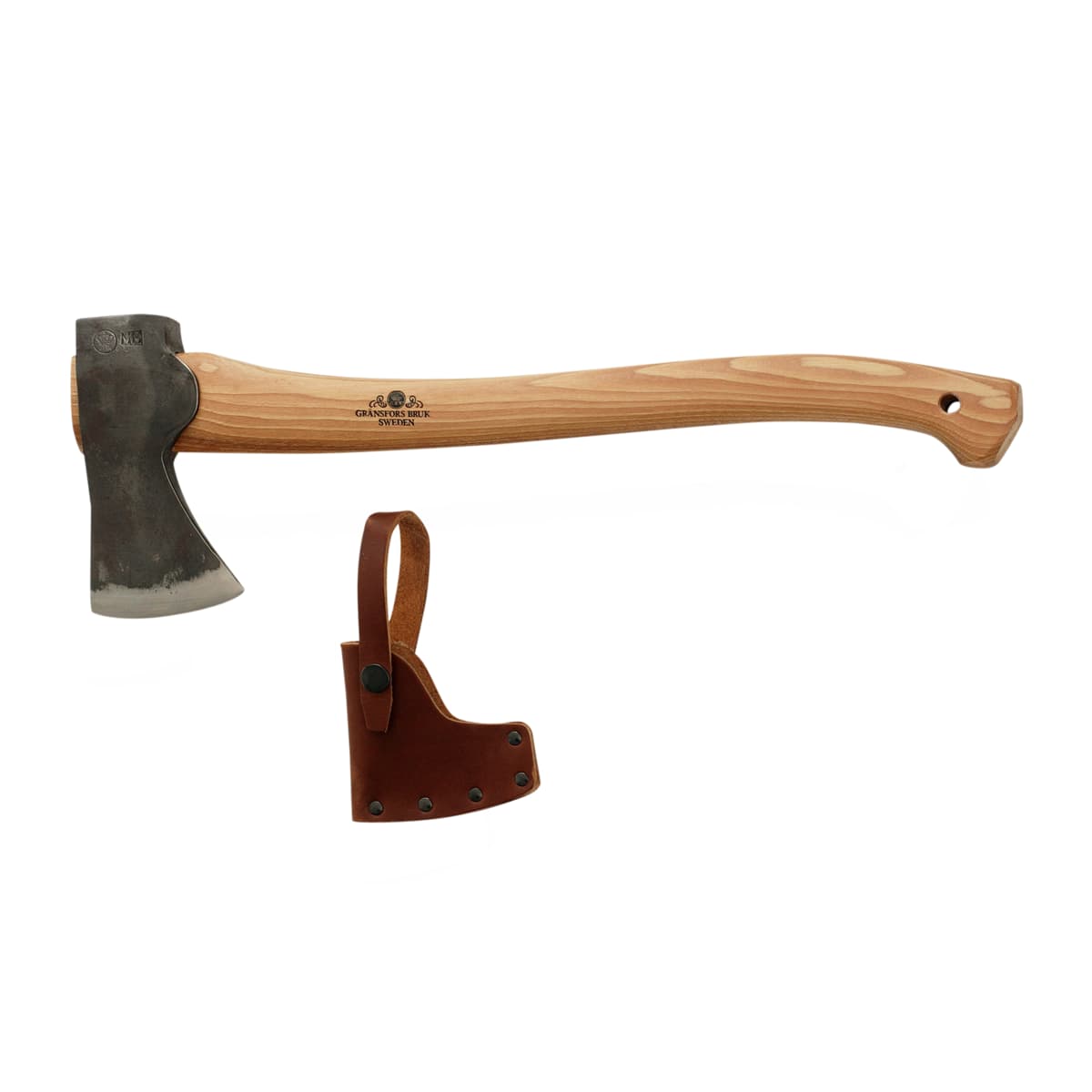
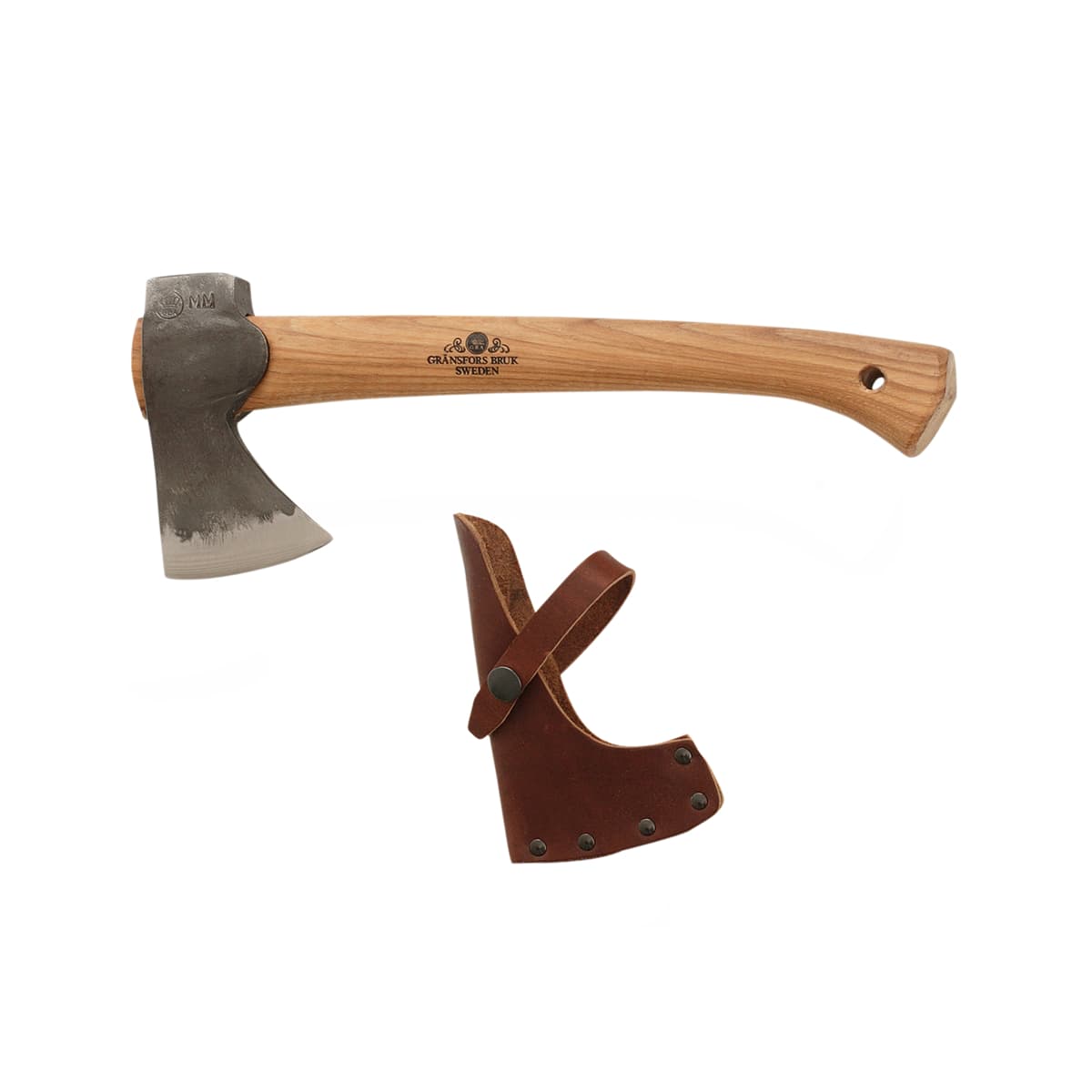
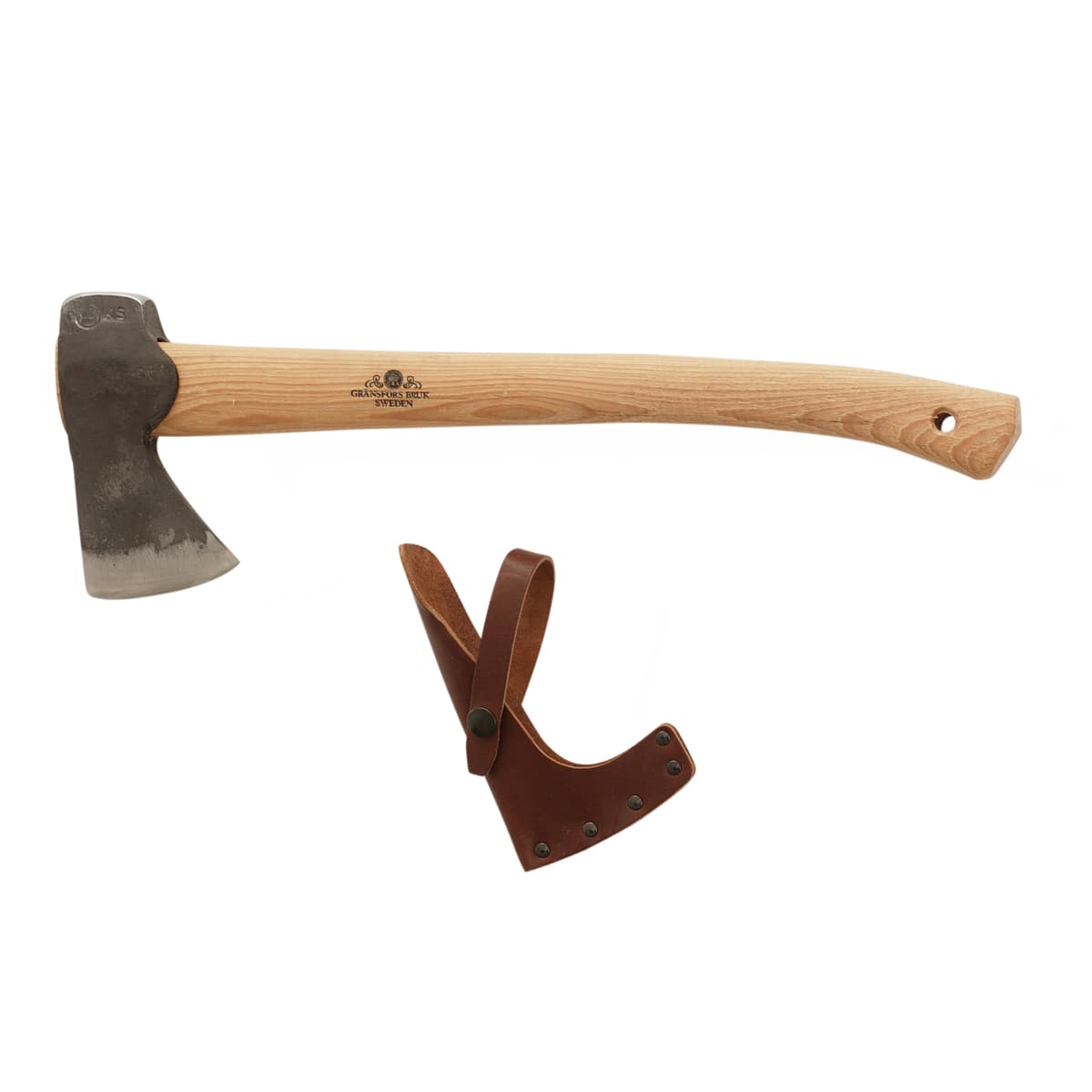
Current Gränsfors axes consist solely of a forged axe head, a natural, wooden handle, a wooden wedge, and in some models, a steel staple - that's it, that's all. The product is fully bio-degradeable, save for the steel elements which are fully recyclable.
As a result of these changes, crafting a Gränsfors Bruk axe is less of a strict, mechanical factory process and much more in the realm of craftsmen and women who, like a musician at play with their instrument, becomes one with high-carbon steel, heat, the rhythmic pounding of presses (that have been around for generations) and their own skills to produce one of the world's finest axes.

Gränsfors' five-step journey from steel bars to a lifetime tool includes:

1) Forging the Soul of the Axe - the Head
The process begins by heating high-carbon, Swedish-made, largely recycled steel to a glowing 1200°C via use of induction coils. Once the steel reaches its optimal temperature, the blacksmith moves it to a massive press that delivers 80 strikes per minute with 180 tons of force. The repeated impact of the press reshapes the steel’s internal molecular structure into a grid structure, providing greater material strength, and allowing for a thinner, broader, and more durable edge than axes formed in a single blow. After the head is shaped, but before the head is hung to cool, the smith stamps it with the Gränsfors Bruk logo and their own initials - a personal seal of skill, accountability and pride.
2) Grinding, Hardening and Tempering
A forged axe is strong, but it isn't ready for a wood pile yet. After initial forging, Gränsfors focuses on the edge, leaving the rest of the head in its natural, forged state.
Hardening: After a coarse grind, the edge is heated to 820°C and quenched in water in order to harden it. This makes the steel very hard but also somewhat brittle.
Tempering: To remove internal stresses and reduce brittleness the heads are baked in an oven at 195°C for exactly 60 minutes. While some manufacturers use oil or lead for quenching, Gränsfors sticks to water. It’s harder to master, but it’s the most eco-friendly way to get the job done.

3) Tumbling and Sharpening
To clean off the "scale" (the crust formed during forging), Gränsfors tumbles the heads with ceramic balls. This doesn't just clean the steel; it improves rust resistance by smoothing the surface. At this point the axe head gets a hardness check to ensure the steel is neither too hard or too soft.
The Crack Test: Gränsfors strikes the corner of the axe edge with force. If there’s a hidden flaw or a microscopic crack from the forge, hardening of tempering processes, this is where it shows.
Only once it survives these trials does the axe edge receive it's final sharpen and is polished to its final, razor-sharp finish.
4) Fitting the Handle
Before the wood meets the metal, the head is dipped in water-resistant anti-rust oil. Gränsfors exclusively uses hickory for their handles - it's the gold standard for tool wood because its long fibres provide a perfect balance of strength and shock absorption.
• The Fit: The handle is driven into the head using a pneumatic press.
• The Security: A wooden wedge is driven into the top to lock it in place.
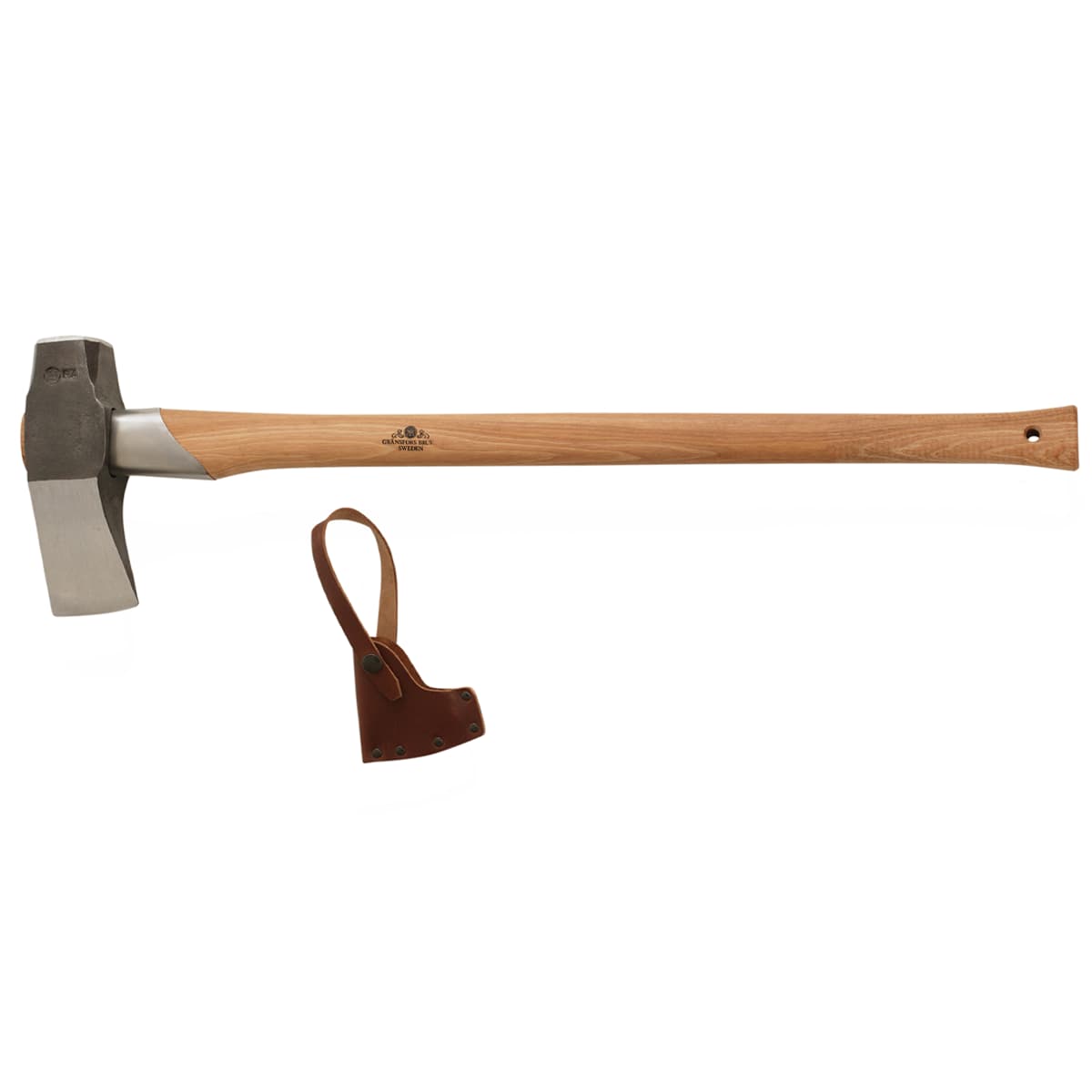
• The Exception: Splitting axes receive an additional steel wedge. Because they deal with higher impact forces, that extra bit of "insurance" ensures the head stays exactly where it belongs.
5) The Final Inspection
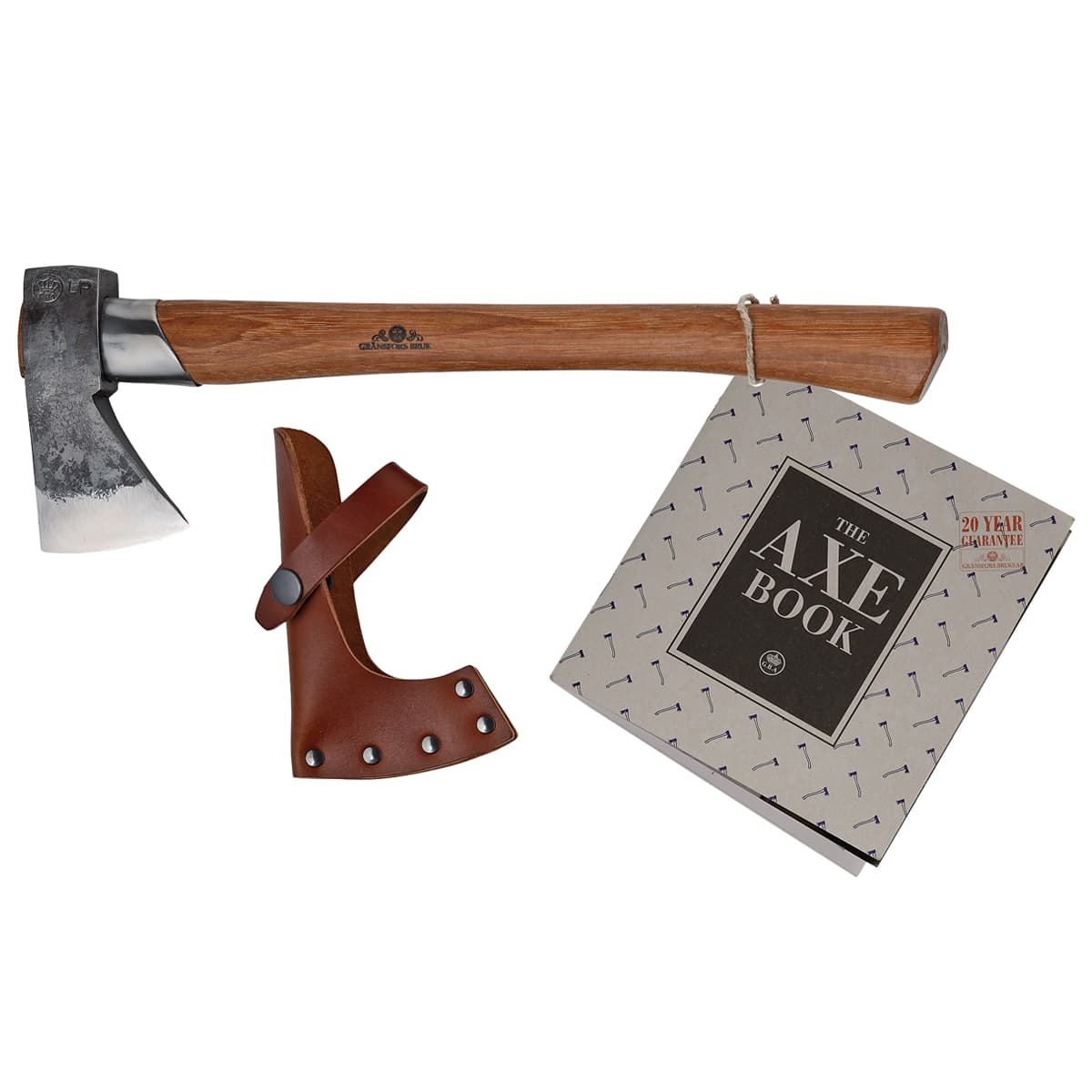
Every single axe undergoes a final human inspection before it earns its leather sheath. Gränsfors uses eco-friendly vegetable-tanned leather to protect that keen edge during transit.
Each axe is packed with the Axe Book - your guide to maintaining a tool designed to last decades. Gränsfors doesn't just hope thier axes last; they back them with a 20 Year Guarantee.
The Gränsfors Axe Book
As part of their mission to provide more knowledge with their products, and to assist customers with proper care, maintenance and repair information, Gränsfors provides their excellent "Axe Book" with all Gränsfors axes.
You can download a pdf copy of the Axe Book yourself here. (3.8MB)
Shop The Gear
Tim Foley

Tim grew up spending summers and much of his spare time in the backwoods of Northern Ontario and has been canoeing, camping and hiking ever since. When not running the Canadian Outdoor Equipment Co., you can find him riding his bike, hiking the Bruce Trail, canoeing, or clearing trails, cutting firewood and testing gear out in the bush.
