



Prospector Tent Best Practices

Canvas Prospector tents which includes ICP’s (previously Woods) tents are packable, movable temporary shelters that can be paired with wood stoves to provide shelter and warmth year round. They are highly adaptable, and can be set up various ways depending on the environment and duration of stay - ranging from quick setups using a ridge and guy lines, log frames using staves from the environment, or internal frames using dimensional lumber for semi-permanent applications. ICP's Prospector Tents are made in Toronto, Ontario, Canada.

Prospector Tents with Goat Team on the White Pass Trail Heading to Lake Bennett, British Columbia
Prospector tents have been used by the First Nations, hunters, trappers, explorers & prospectors as far back as the 1800’s and are still used by these groups as base camps when out on the land today. Additionally, prospector tents make excellent temporary and long term removable shelters, bunk houses and overflow sleeping quarters for cottagers, land owners and those looking for additional capacity without having to invest in or build permanent structures, and makes possible putting a temporary structure where permanent structures are not permitted. Once set up, prospector tents feel more like cabins than tents, and with proper care and maintenance, can be set up for long periods of time.

Winter Use With a Stove
ICP’s canvas prospector tents provide various footprints and sizes that are portable, packable, and provide breathability - especially important in colder weather when paired with a stove. While synthetic materials work well in summer conditions, in cold weather, the buildup of moisture from bodies and breathing inside a tent can become problematic - condensing on the inside and dripping down onto inhabitants, sleeping bags and gear, and making it nearly impossible to fully dry clothing and sleeping bags out. By using canvas in the tent’s construction, the structure is able to breath, and allows excess moisture to exit the structure by transpiring through the canvas, and when paired with a stove, allows users to fully dry out any snowy, wet clothing or gear, as well as providing a heated environment to operate in.
Prospector Tent Materials
The woods prospector tent is made from cotton woven into 10 oz canvas. The canvas is then treated with mold and water repellants and fire retardants (required by Canadian law) which bring the weight of the material up to 17.6 oz in the case of ICP’s Industrial Prospector tents.
All cotton canvas tents are susceptible to shrinkage (up to as much as 7%) and loss of the applied finishes with exposure to the elements over time. With tents used under so many variables it is impossible for any manufacturer of cotton canvas to specify what “over time” translates to in terms of an actual time period - this can vary from months to years, so it is the responsibility of the end user to maintain and protect their tents according to their operating environments.
Prospector Tent Precautions
Canvas tents require care, as do most fabric materials, in order to ensure they are operating at their full potential, and when leaving set up for periods longer than a week, care needs to be taken to ensure the tent and fabric is secured and provided the following considerations, as each have effects on the performance and longevity of canvas prospector tents:
SUNLIGHT
UV radiation via direct sunlight is the single biggest wear factor with prospector and canvas tents in general. Over time, UV light can age, and degrade both stitching and materials of the tent, such that under windy or blustery conditions, the end user risks increasing the chances of tearing and ripping due to this degradation. As a precaution, it is strongly advised to employ the use of a secondary tarp, to protect the canvas of the tent from direct sunlight and damaging UV rays. The secondary tarp, in addition to UV protection, can also protect the tent from excessive rainfall, aid in effective drying out after storms and protect from hazards that may fall onto the tent while set up (branches/foliage).

Secondary Tarp for UV Protection

Framing system with secondary tarp

Platform with secondary tarp

Proper gap between tent and tarp for airflow
WATER/AIRFLOW
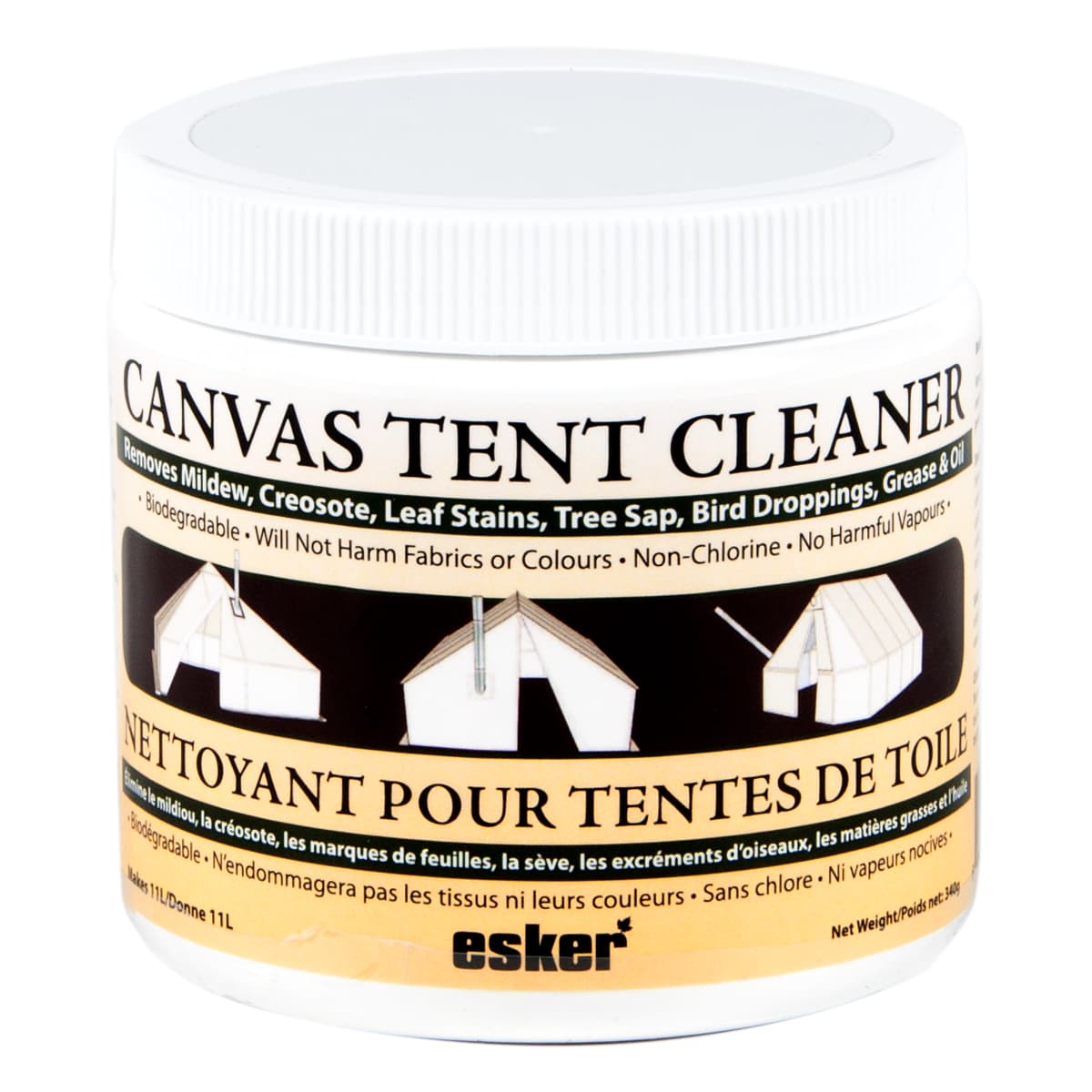
Prospector tent fabric has a mold resistant treatment that will prevent the instant growth of mold, in wet or damp conditions. It does not, however, make the tent mold or mildew proof, as dampness/humidity mixed with low or no air movement will cause mold to grow over time - despite the treatment. The end user can wash any areas were mold or mildew may have started with mild soap and water, or a canvas tent cleaner such as Esker’s Tent Cleaner, but the way to ensure this does not happen in the first place is by ensuring proper airflow around the tent via use of a secondary tarp with a minimum 30 cm | 12” gap between the tent and tarp.
This allows the tent to stay drier, and allows for air to circulate around the tent, aiding it’s ability to dry out after high rain fall or humidity events. When storing a prospector tent, it is vital that tents are put away absolutely bone dry, as tents that are put away wet or damp can accelerate the growth of mold and mildew while being stored - making for an unpleasant surprise when it comes time to set it up again.
Heavy driving rains during and after a storm will require inspection for sitting water and debris which should be lightly brushed off including wet dirt around the base of the tent.

Collapsed unattended tent
SNOW CONDITIONS
ICP prospector tents require little care in winter conditions other than clearing the roof of any snow build up. Caution should be taken during thaw and freeze cycles to avoid heavy ice build-up on the roof of prospector tents, as if left unattended, it may overload the framing/suspension method and cause collapse. Tents heated with a stove during cold conditions require the heat source to be a minimum 18” way from wall & roof and maintain all stove manufacturer’s guidelines. Heating a stove & stove pipes “red hot” can cause damage to the tent & stove ring as well as the heating unit itself.
WIND
Light to moderate winds have little or no effect, and actually help dry out and keep an air flow around the tent. Strong sustained winds or gusts can put strain on the tent and seams. Tents should be relaxed during strong winds especially those exposed to winds in unprotected open areas to avoid damage. Tents should be inspected during and after any storm for tears & cuts caused by blowing debris.
TEMPERATURE
Temperature alone has no effect on the Canvas prospector tent, and indeed, they are designed to be used in all seasons.
Using Stoves with Prospector Tents
ICP's Industrial Prospector tents supports the use of wood stoves, through the installation of a stove pipe ring into the tent (done during manufacture). Industrial Prospector tents are treated with flame retardants as per Canadian regulations, whereas ICP Standard tents are not: meaning that only Industrial Prospector tents are designed for and safe to use with stoves - Standard Prospector tents should NOT be used with stoves or other heat sources.

Standard Stove Pipe Install location
Stove pipe ring installation can be facilitated anywhere on the tent (maintaining minimum distances from corners and seams), but a standard stove pipe install is done on the front left door flap - which provides several advantages: by having the stove at the front of the tent, there's no need to walk through or into the tent when collecting or piling split wood to burn, making stacking it quicker and easier. Having the stove at the front also creates a heat curtain, which helps keep cold air out when the stove is in operation. Running the stove pipe out the side of the tent, as opposed to it's roof, also assists with keeping embers and creosote off of the roof fabric, and makes it easier to sling secondary tarps without the need for installing stove pipe rings into them as well (as the pipe would need to go through both the tent roof, and the tarp).
Set-ups and Frames
As ICP does not currently offer a frame option with their tents, setting them up can take several avenues, depending on the use case and available resources and materials.
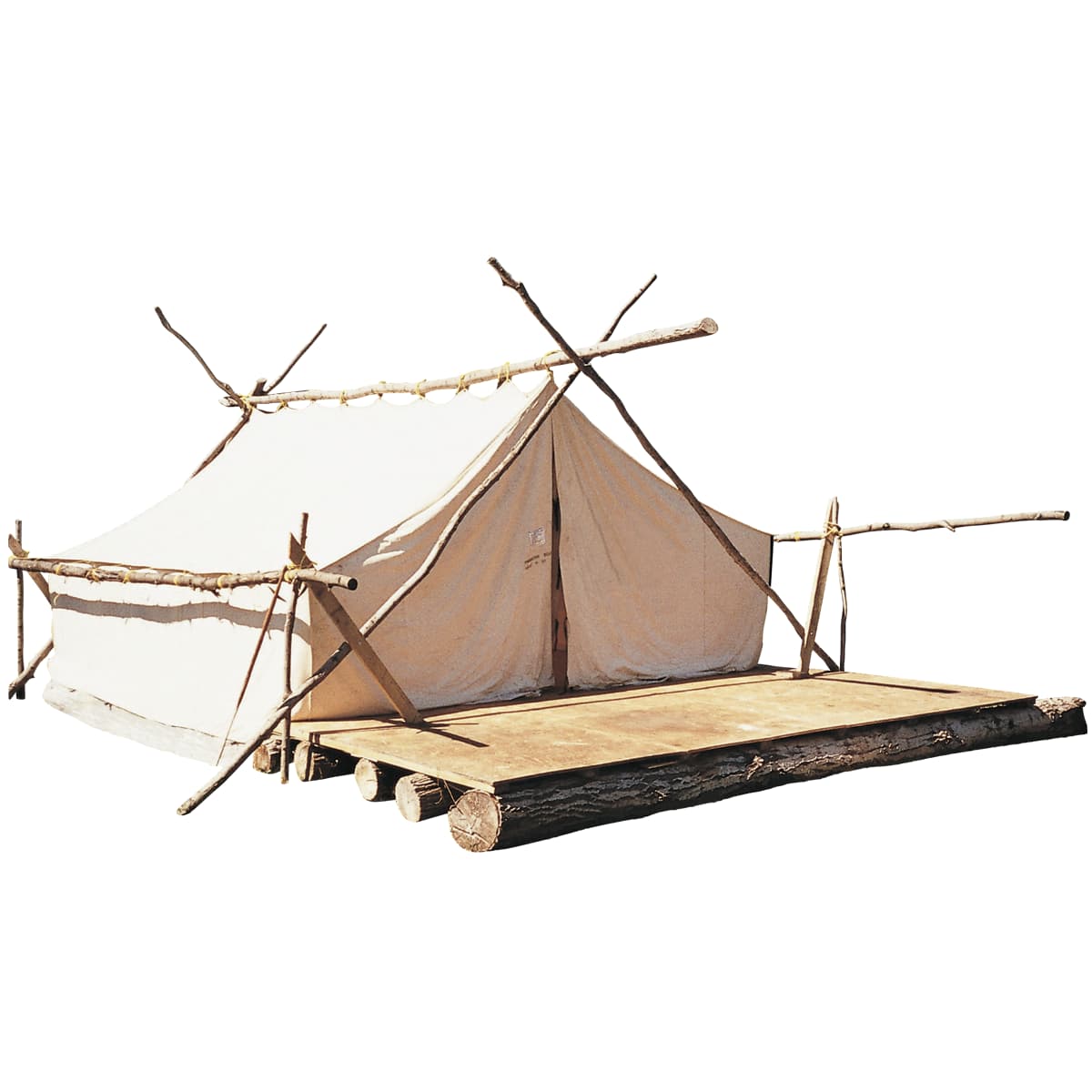
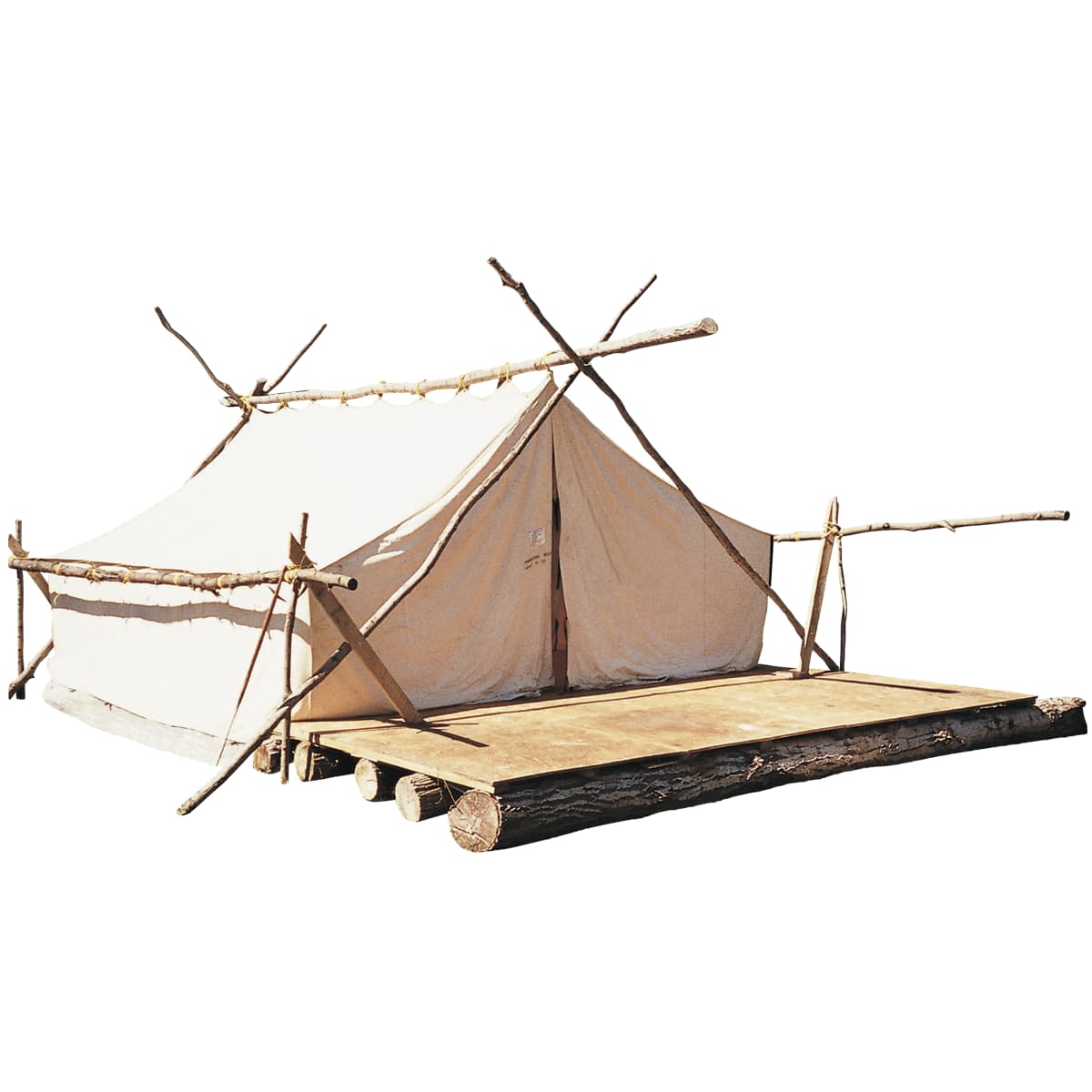
When used for temporary, shorter stays (days), using available wood from the surroundings as a frame, or suspending the tent from a ridge line, with or without the use of racheting straps to help tension the tent are good options.

Moose Hunt Tent Set-up

Tent Suspended from Staves

Use of Ratchet Strap as a Ridge Line
If the tent is going to be used for longer periods of time, for or more permanent applications, an internal frame made from dimensional lumber in conjunction with a platform is a highly popular and functional method for stability and longevity. When constructing internal frames, it’s important to note that frames need to be built smaller than the stated dimensions of the tent ( 10’ x 12’, 12’ x 14’ etc..) for two reasons: as mentioned, tent fabric can shrink up to 7% due to environmental conditions, and being made from fabric, exact wall dimensions may deviate slightly from posted wall and height dimensions. Therefore, designing a frame that is approximately 7% smaller than the tent’s nominal sizing is recommended for those building internal frames.
Installing framing for use of a secondary tarp is strongly recommended to facilitate UV and weather protection, and ensuring there is a 30 cm gap between the main tent structure and the secondary tarp will ensure that air can flow around the tent, and facilitate thorough drying when the tent has gotten wet. Using a light coloured tarp, allows light to penetrate into the main tent during daylight hours.

14 x 16 x 5' Sidewall Prospector Tent Dimensional Lumber Frame Example
Prospector tents, once properly set up, feel more like cabins than tents in use and operation due to the high ceilings and sidewalls (especially ICP’s 5ft sidewalls). They make excellent long term base camps or overflow sleeping quarters, and when paired with a stove, provide a warm, dry, comfortable and spacious environment. Care needs to be taken to set them up in the prescribed manner, inspect them regularly, and treat any mildew or mold growth with mild soap, a soft bristle brush, or dedicated tent cleaner. By following these guidelines, you can expect your Prospector tent to provide many many years of reliable service.


Shop The Gear
Tim Foley

Tim grew up spending summers and much of his spare time in the backwoods of Northern Ontario and has been canoeing, camping and hiking ever since. When not running the Canadian Outdoor Equipment Co., you can find him riding his bike, hiking the Bruce Trail, canoeing, or clearing trails, cutting firewood and testing gear out in the bush.
