



Helle Overview & Info: Steels, Models, Use Cases And More

Steinar and Sigmund Helle
Helle is a family company, started in 1932 by Steinar and Sigmund Helle, who set out to make a better knives for the farmers and workers in their local area of Holmedal, Norway. In Norway at the time (and in Scandinavia in general to this day) a basic part of getting dressed involved wearing a knife on one's hip - as it was an indispensable tool for use in the fields, forests, mountains or when out fishing in the fjords. On Sundays, or on other special occasions a staskniv or bunadskniv (a Sunday knife - a more decorative and aesthetically pleasing knife) was traditionally required - but as Norway in the 1930's was one of the poorest nations in Europe, workers in Holmedal were hard pressed to find the funds for 2 knives - enter the Helle brothers who saw their opportunity: make a dependable, working knife that could also be cleaned up, and was beautiful enough for use as a Sunday knife.
While much has changed in the decades since Steinar and Sigmund started Helle, Helle still makes traditional Nordic style knives. There has also been much evolution and adaptation of their processes to offer other styles of knives as well, including folding knives, and full and half tang bushcraft, hunting and general outdoor use knives. At The Canadian Outdoor Equipment Co. we have a very good selection of Helle's model offerings. Helle as a company never stays still, and is consistently releasing new models, limited editions, and classic re-issues - so while this video is current for the summer of 2026, please do check out our website for our latest up-to-date Helle offerings.
Blade styles:
A good place to start with Helle knives is with the blade style, as this has a lot to do with the overall feel, fit and use case of the knife. Helle currently offers partial tang, stick tang, half tang and full tang blades. Each blade style is a trade-off between weight, strength and function.

Blades with partial tangs make beautifully lightweight knives - great for things like carving, filleting and skinning, but not at all designed for blunt force or impact.
Full tang blades are the most robust in terms of strength and rigidity but are much heavier than their partial tang counterparts.
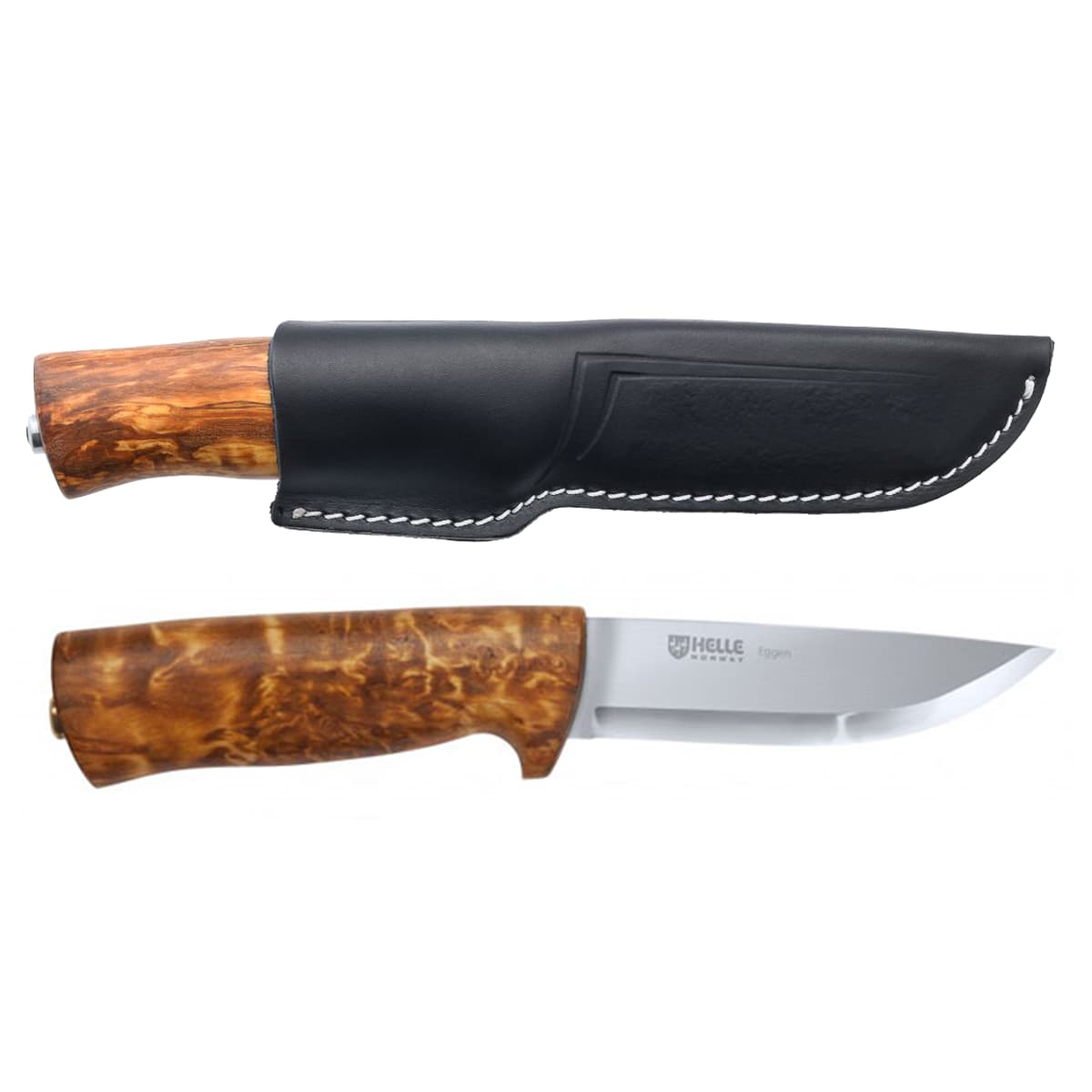
Stick tangs are the blade style of traditional Nordic knife makers: offering a good weight to strength ratio and allowing for the use of the pommel as a hammer, but not designed for impact or batonning (using the knife to split wood by means of pounding on it's spine). Steinar and Sigmund Helle would have been horrified to see anyone use a knife in this fashion - in their day, a knife was for cutting, and keeping a razor edge on hand, not bashing it through pieces of wet wood. This task was best left to an axe - the right tool for that job. The debate still rages today, but for those wanting bigger, heavier knives for more robust use, Helle has also developed both half and full tang blades with these users in mind.

A sampling of the Helle Knife Family
Steel Types:
Helle, along with a Norwegian steel mill, developed a proprietary laminate steel for use in their knives. Comprised of 3 layers: a centre layer of very hard, rigid steel core that takes and holds an edge extremely well, but if used for the whole blade, would be prone to snapping or breaking when lateral forces are applied. By surrounding the blade core with softer steel, this allows for flex - providing peace of mind and ensuring the user has a sharp edge whenever needed. Today, this steel is known as H3L, and is available in either stainless (H3LS) or carbon steel (H3LC) variants.
Stainless vs Carbon Steel:
This topic is akin to "The Beatles" vs "The Rolling Stones" debate - which band is better depends largely personal preference and who you ask. Stainless steels were introduced after World War II, and were vastly inferior at that time, however, steel making has come a long, long way since then, and today there are both very high quality stainless and carbon steels available for knife makers.
For the vast majority of knife users, the main difference is in how well both steels deal with corrosion: while stainless steel is not rust proof, it is highly corrosion resistant, while carbon steel needs to be cleaned and oiled regularly - especially after food prep to avoid rusting. So if you're a very fastidious person, and will tend to and maintain your knife regularly, you may be a good candidate for a carbon steel blade. If however, you want a blade that is much more rust resistant, even after leaving it out in the rain overnight, stainless is a much more forgiving choice.
Other steel types Helle uses are non-laminated, and include 12C27 stainless (very well regarded, and long used by knife makers), it's updated refinement 14C28N (tougher, more stain resistant and generally tempered to greater hardnesses) also, Helle uses Uddeholm Sleipner carbon steel - which provides an excellent balance between toughness and edge retention, and can be tempered to very high hardness levels.
Partial Tang Knives

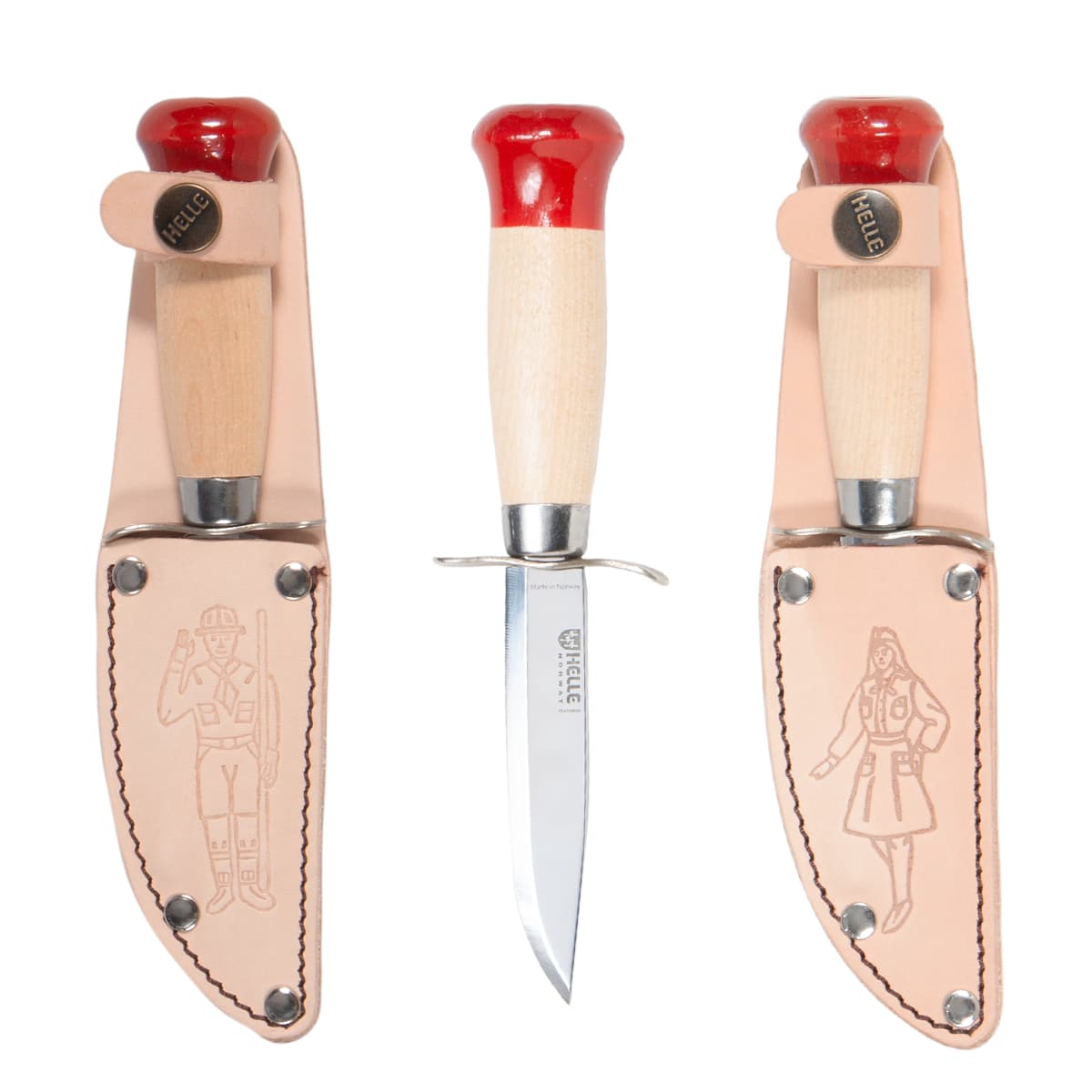
Knives in this category, include Helle's kid's knives, Helle Speider, and one of my favourite - the Helle Harmoni - currently out of production, but I hope Helle will bring it back as a limited release at some point in the future. Both kids' knives and the Speider sport 12C27 blades, with double, and extended finger guards to keep young fingers safe while using.
Classic Stick Tang Knives

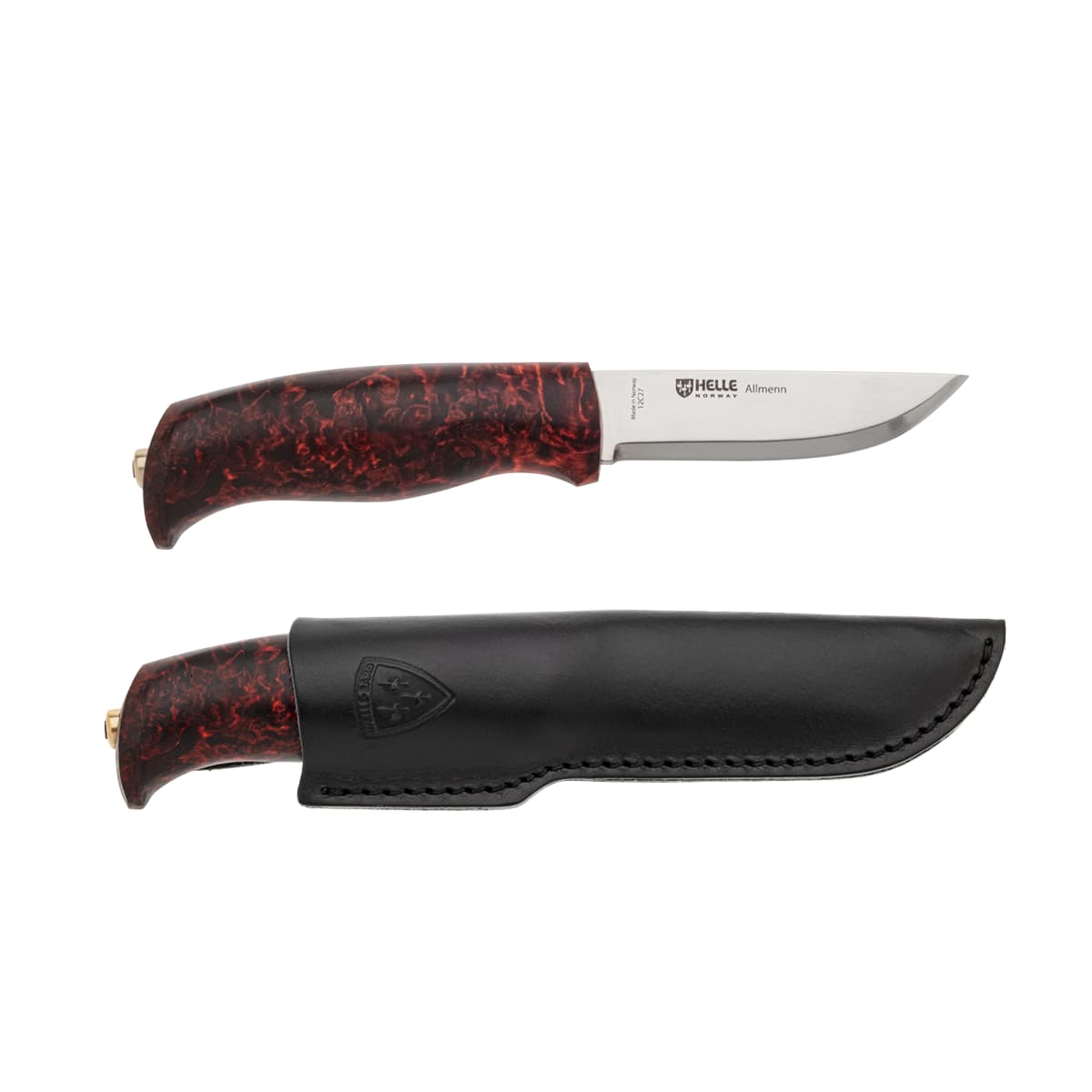
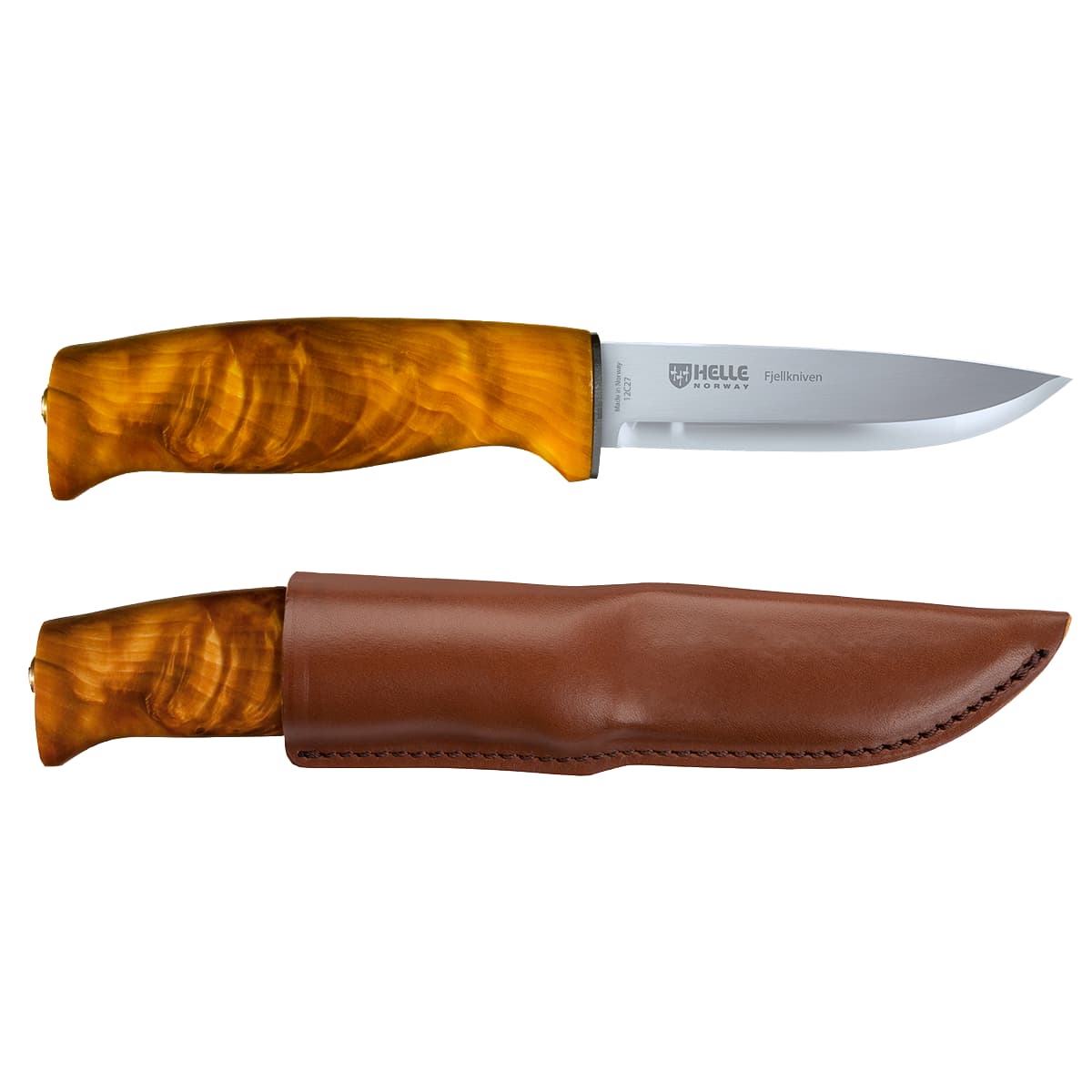
The Allmenn, Fossekallen, Harding, Fjellkniven, Arv, and Harding Rubin Limited Edition are designed for small to medium sized hands and sport either 12C27 or H3LS blades.
The Eggen, Gaupe, GT, and Jegermester models are designed for medium to large hand sizes, and also sport H3LS blades.
Full and Half Tang Knives

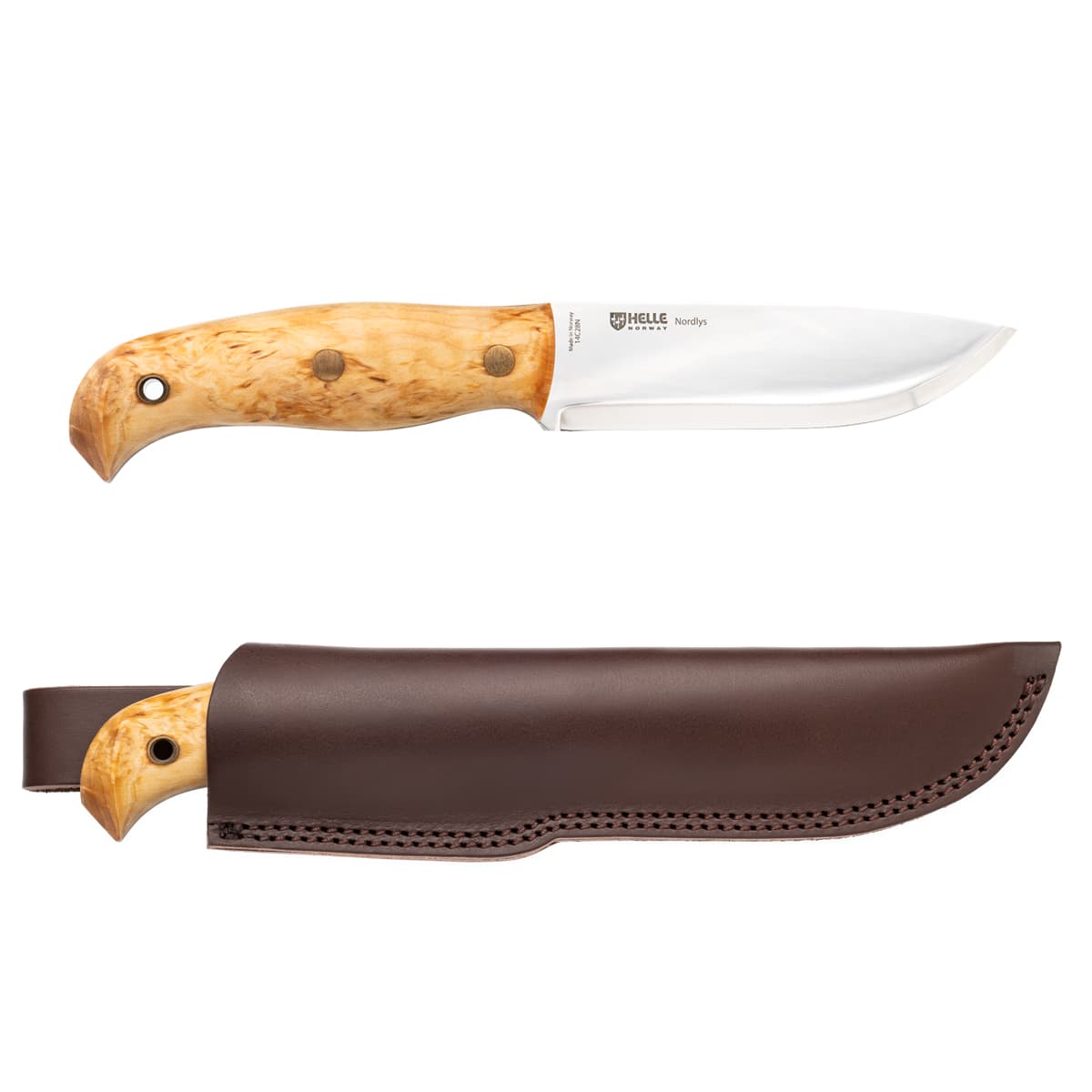
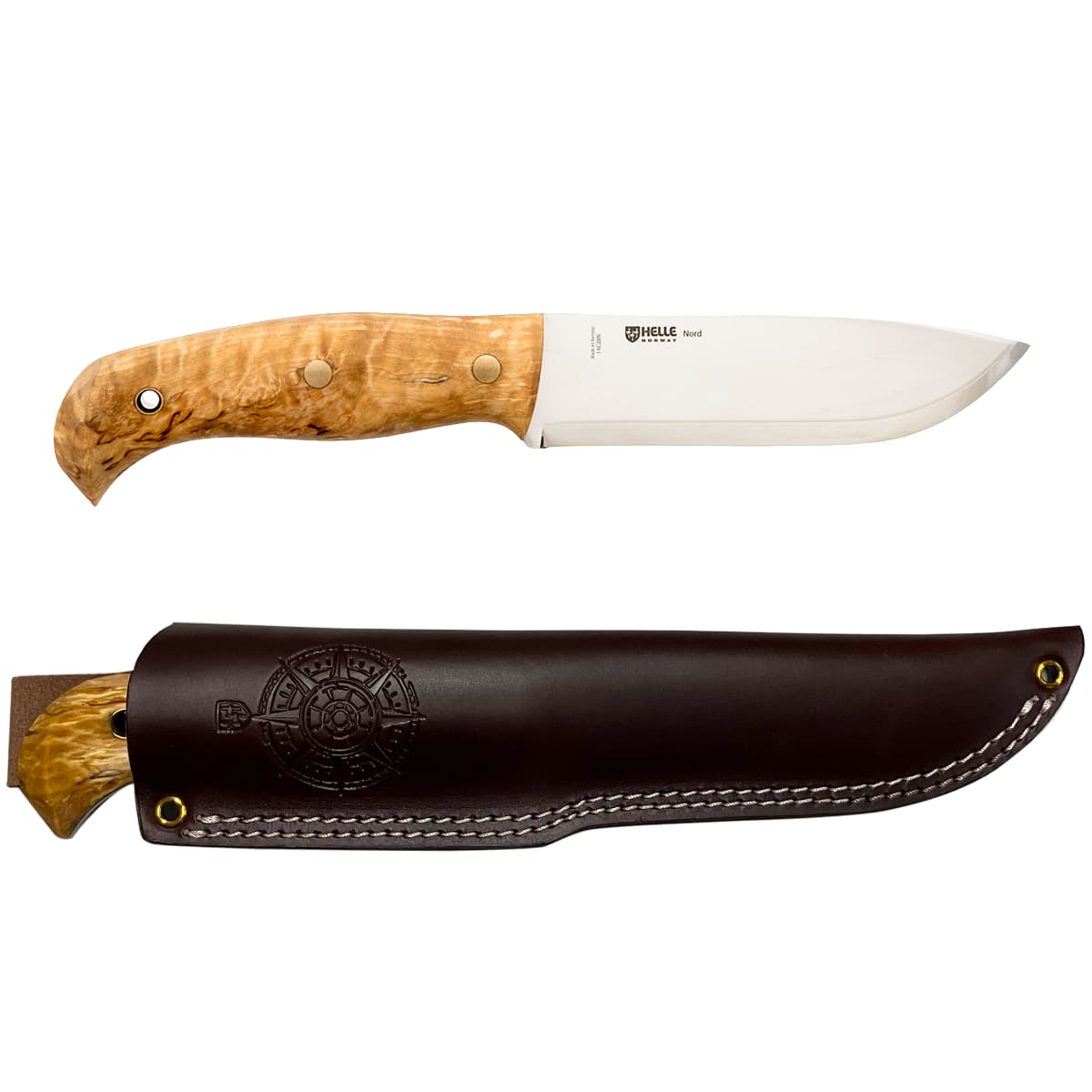
The Mândra, Polaris, Wabakimi, Utvaer, Temagami, Nordlys, Didi Galgalu and the Nord provide either full or half tang construction and run from the neck sized Mândra and Polaris models to medium hand sized Wabakimi and Utvaer to the larger hand sized Temagami, Nordlys and Didi Galgalu to the largest full tang offering, the Nord.
Folding Knives

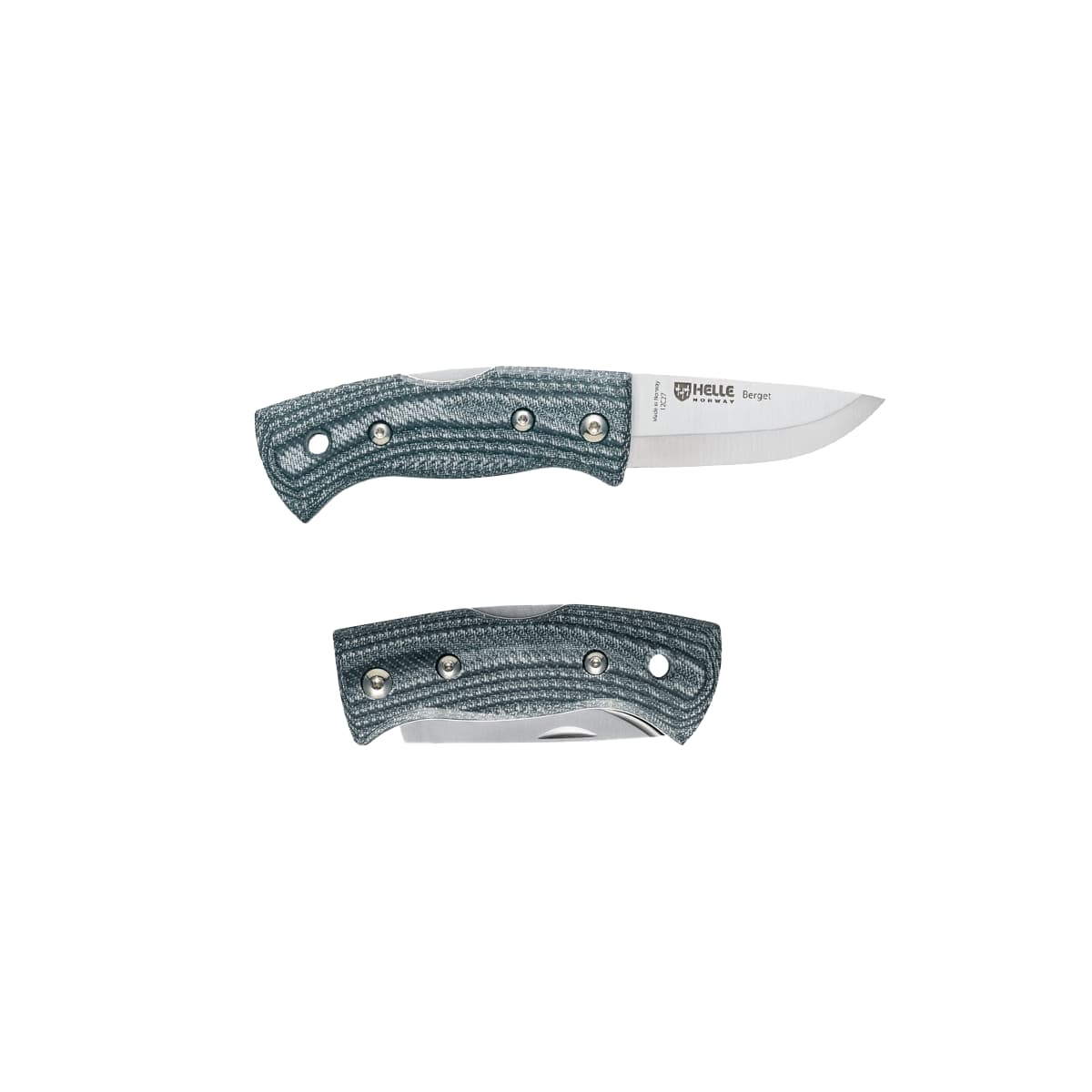
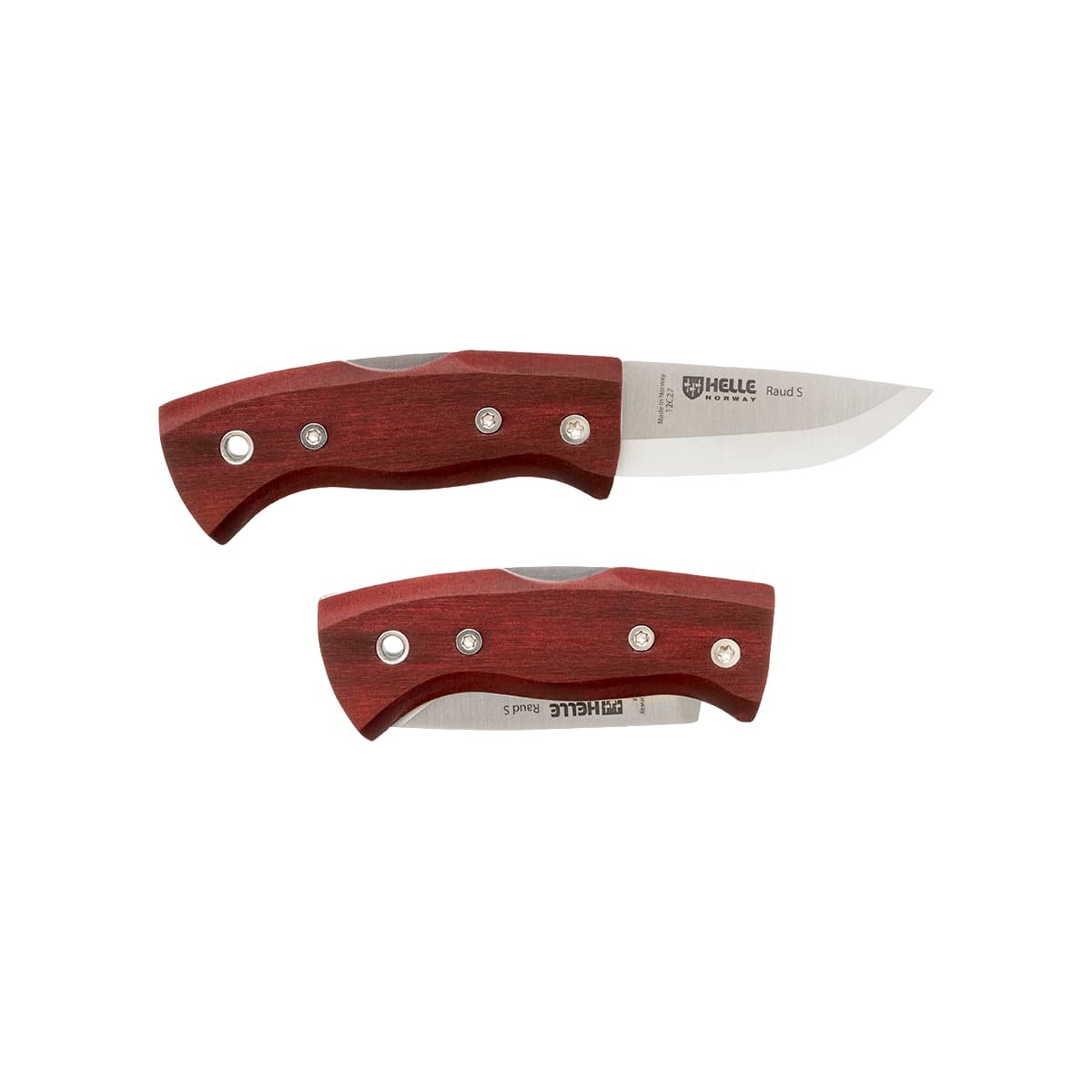
Folding knives sport either 12C27 or H3LS blades, and are designed as every day carry utility style pocket knives in the case of the micarta handled Berget models, and the wood handled Kletten. Compact and versatile multi-use models include the Raud Small and Medium folding knives, or as a full size, functional, folding fixed blade replacement in the case of the Bleja.
Fillet Knives

Helle offers two fillet knives - the classic wood handled Steinbit, and the cork handled (so that it floats) Hellefisk. Both blades are made thinner than Helle's other blade offerings to allow for flex when in use.
Specialty Knives
Lappland

The Lappland is so called for it's use at higher latitudes by the indigenous Sami people of Northern Scandinavia where it serves as a type of machete and an all around knife for these nomadic reindeer herders.
Dele

Helle's first chef's knife, the Dele sports a flat ground and excels at food prep at home, at the cottage, or at camp.
Viking

A very unique Helle knife offering is the Helle Viking knife, made from H3LC carbon steel who's design comes from a knife found in a viking grave near the Helle factory and is representative of Nordic knife making styles from the viking age.
All Helle knives are hand made, come with an individually hand made sheath, and come with a lifetime guarantee against manufacturing errors, faulty materials, or craftsmanship.
One of the joys of a wood handled knife is that with time, age, and care, it looks better and better - indeed, good enough to use as your Sunday knife when the occasion calls for it.
For more information about Helle knives, feel free to drop us a line or give us a call to talk through which Helle knife may suit your needs best.

The Helle Team at the factory in Holmedal, Norway
Shop The Gear
Tim Foley

Tim grew up spending summers and much of his spare time in the backwoods of Northern Ontario and has been canoeing, camping and hiking ever since. When not running the Canadian Outdoor Equipment Co., you can find him riding his bike, hiking the Bruce Trail, canoeing, or clearing trails, cutting firewood and testing gear out in the bush.
